
Add a button to a WP page
A free plugin adds a chat to your WP dashboard. Type “Add a ‘Book a class’ button to Workshops.” See it first, press the button, undo in one click.
Works on block themes: you'll see Appearance › Editor in your dashboard. How to tell
- Nothing changes without your OK
- Undo in one click, or a warning first
- No account, no password to share
Needs WP 6.3 to 7.1, PHP 8.0 or newer, and an administrator login. One site per install.
The download is a plugin. Turning it on connects your site to cmshands.com and adds 3 small rescue files. Deleting the plugin removes them and everything it stored. What we send
Add a “Book a class” button at the end of the Workshops page that links to the Contact page.

Watch it do this on a real site

You ask
You type what you want in the chat, in your own words: what the button says, where it goes, and which page it links to. The chat sits in your WP dashboard.
Add a “Book a class” button at the end of the Workshops page that links to the Contact page.
You see it first
It finds the Workshops page, reads it and your theme's colors, and about 27 seconds later shows a card. One of its reads didn't work the first time; the next one did. Press After to see the page with the new button. Nothing has changed yet.
Ready for you to review — it's the Workshops page (id 38), and the button points to /contact/ (the Contact page).
- 2 secondsLooking for what you meant
- Looking for what you meant
- 4 secondsReading from your site
- 5 secondsReading one of your pages
- 8 secondsLooking at your theme’s colours and sizes
- 12 secondsPreparing the change for your OK
- Previewing your page

Or check the code
Press Code to see exactly what it adds: one button after the last paragraph, linked to /contact/. The rest of the page stays as it is. You don't need to read code to use it. The green button makes the change; Not now leaves the page alone.

You press the button
Only now does it change your page. It adds the button, reads the page back to check, and the card turns green with an Undo link. The gap before it is us looking at the card.
- 44 secondsUpdating one of your pages
- Checking the change

It's on the site
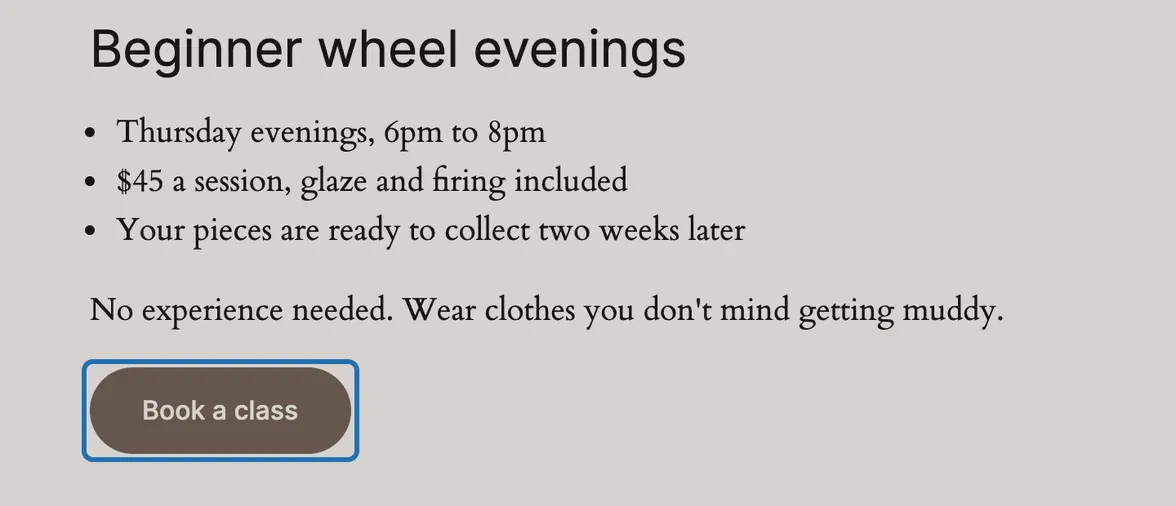
The foot of the Workshops page right after, as a visitor sees it. The button sits under the last line, in the theme's own button style, and links to the Contact page. Nothing else on the page moved.
Done. I checked afterwards, and it now says "Book a class".

Undo, if you want
One press of Undo took the button off again. It checked the page and showed exactly what it removed.
Undone. I checked afterwards, and it's back the way it was.
- 55 secondsReverting the change
- Checking the change
A real run on our test site, Quillmoor Pottery (WP 7.1.3, Twenty Twenty-Four), Oct 11, 2026. From asking to done, it took 44 seconds.
That's the whole job. The plugin is free: 3 changes to try it, no account. Nothing changes until you press the button.
Needs WP 6.3 to 7.1, PHP 8.0 or newer, and an administrator login. One site per install.
The download is a plugin. Turning it on connects your site to cmshands.com and adds 3 small rescue files. Deleting the plugin removes them and everything it stored. What we send
How to add a button in WordPress yourself
Checked on WP 7.1, Oct 11, 2026
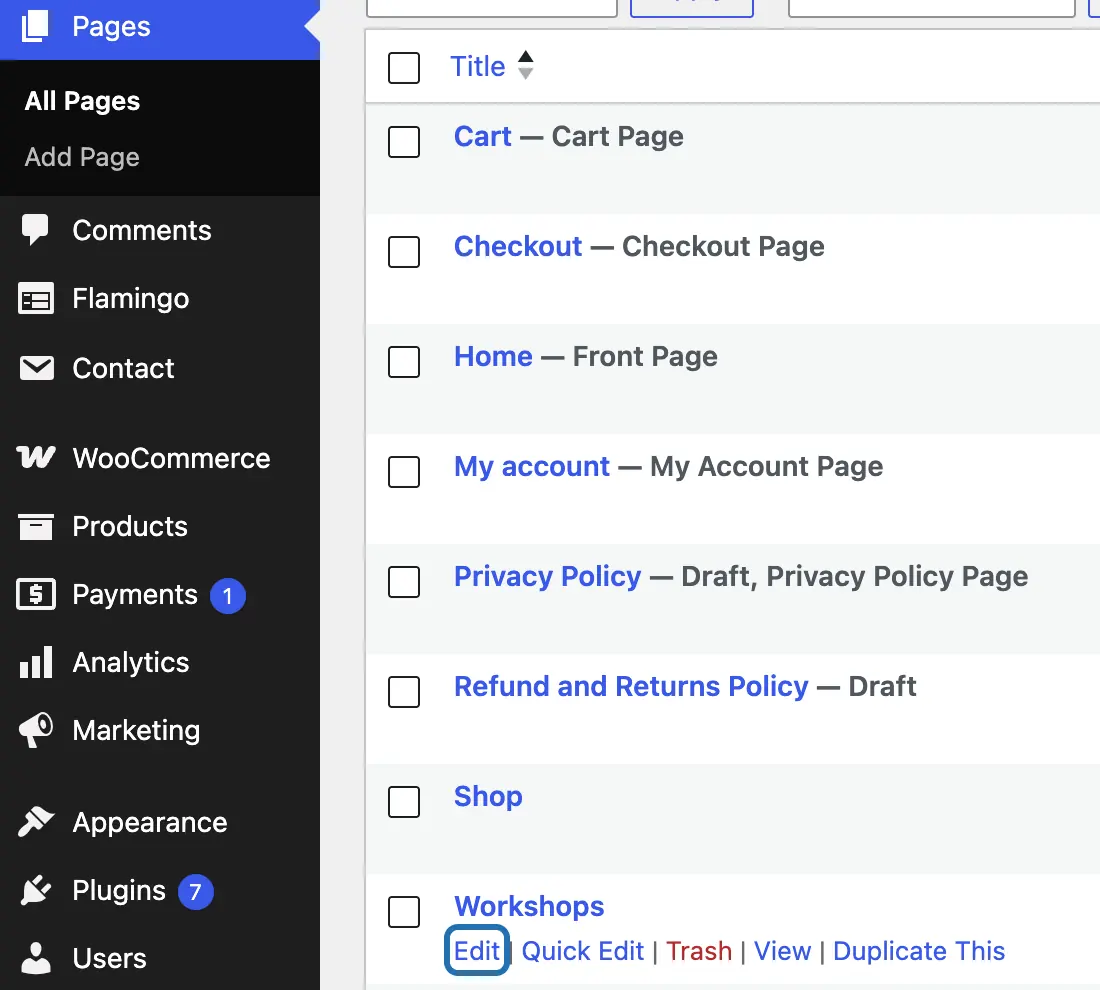
1. Log in to your dashboard and go to Pages › All Pages. Hover over the page and click Edit. On our test site, that's Workshops.
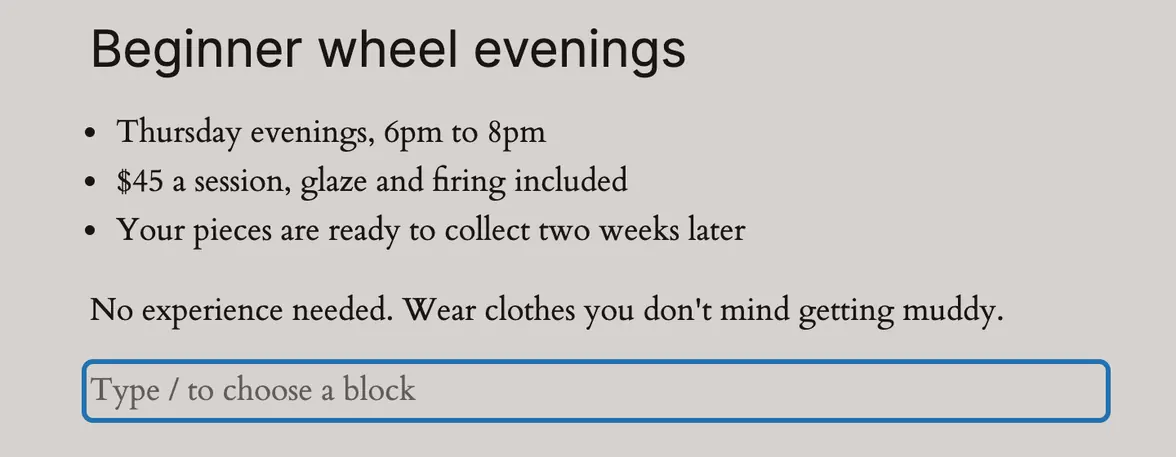
2. Click at the end of the paragraph the button should follow and press Enter. An empty line appears: “Type / to choose a block”.
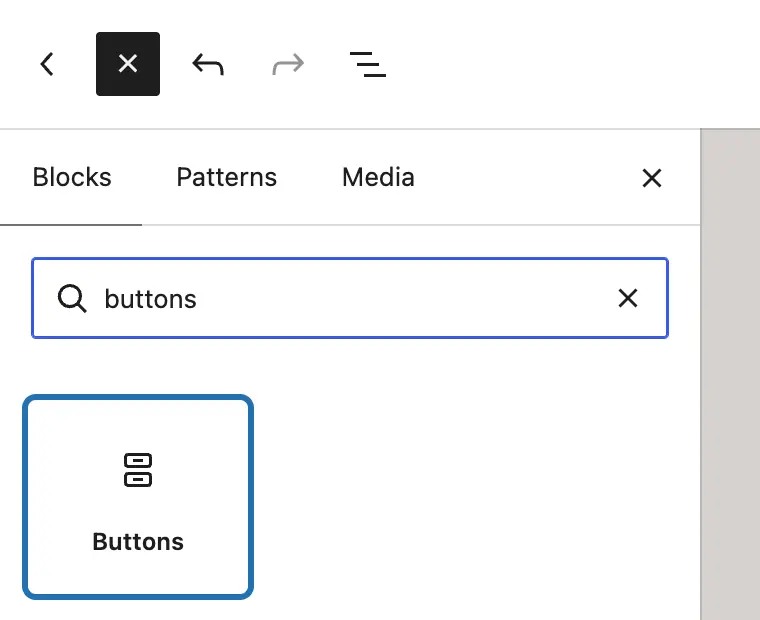
3. Press the blue + at the top left, type “buttons” in the search box and click Buttons. Typing /buttons on the empty line works too.
4. A button appears with “Add text…” in it. Type the words visitors should see, like “Book a class”.
5. Press the link icon in the small toolbar above the button. Type the page's name, like Contact, and pick it from the list.
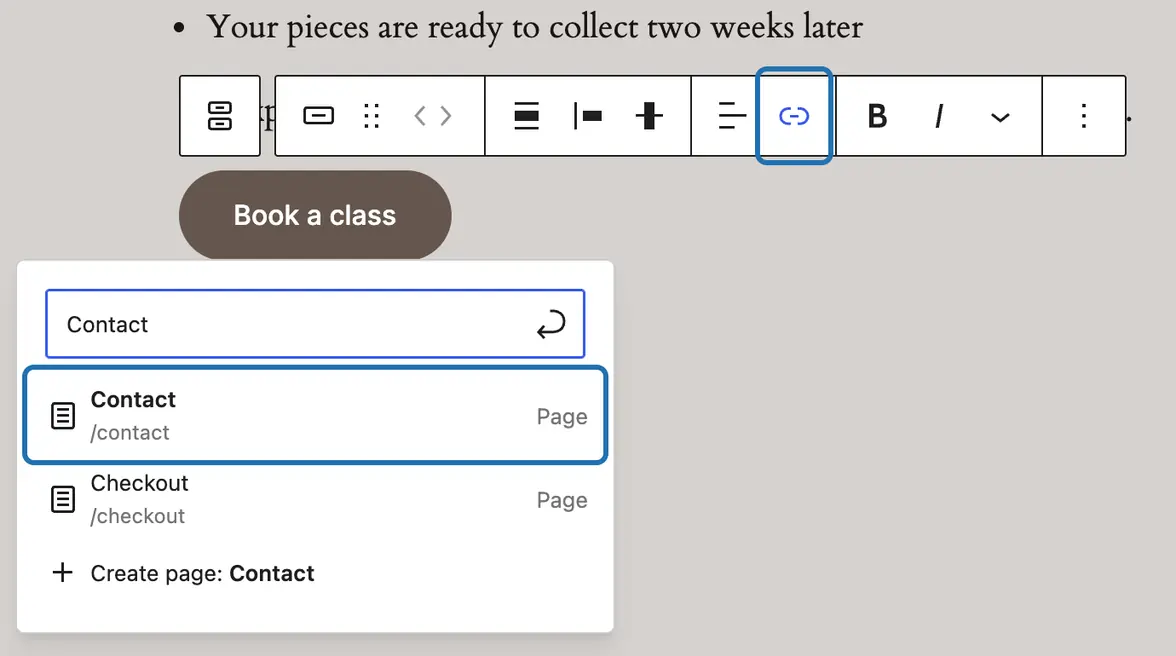
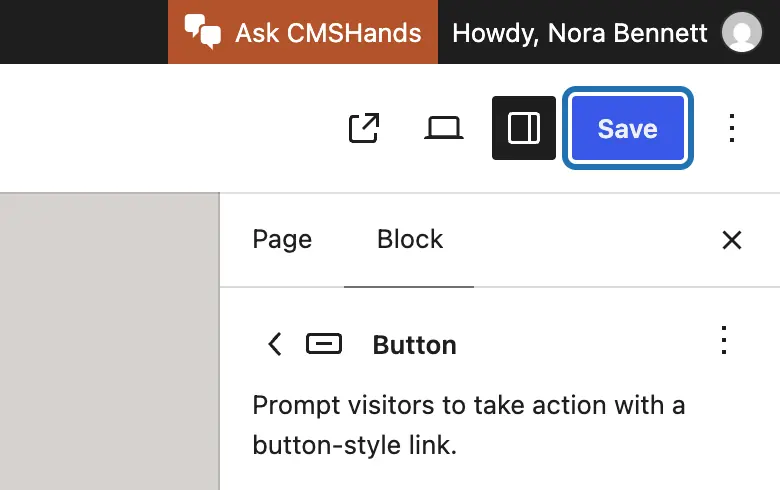
6. Press Save at the top right. Then open the page on your site and click the new button once to check where it goes.


If your site has the Classic Editor plugin, pages open as one big text box with no blocks, so there's no Buttons block to add. Your theme or a plugin may have its own button for that. CMSHands adds buttons on block themes, to pages made in the block editor.
A button is a link made to stand out. Keep its words short and say what happens next, like “Book a class” or “Call us”. To check it, open the page in a private window, where you're logged out, and click it once.
What it won't do here
A floating button that follows you down the page
Buttons that come as code, like some payment buttons
A button on a page made with a page builder
A button in the header of an older (classic) theme
New colors or fonts
Why it won't wreck your site
Nothing changes until you press the button.
You see it first.
One click undoes it.
Free to start
| No account | With your email | Paid plan | |
|---|---|---|---|
| Changes | 3 to try it | 10 every month | Coming. Nothing costs money until you choose it. |
| Questions | 30 a day | 100 a day | |
| If it breaks | Daily check and crash rescue | The same, plus email alerts |
Undo a change within 24 hours and it doesn't count. If you haven't added an email after 30 days, only crash rescue stays on until you add one. A change is one card you approve. A job that touches several pages or plugins is several changes.
Questions
Is it free?
To start, yes: 3 changes with no account, then 10 a month once you add your email. Questions are free, up to 30 a day.
Written by CMSHands team.
Add a button to your own page
Needs WP 6.3 to 7.1, PHP 8.0 or newer, and an administrator login. One site per install.
The download is a plugin. Turning it on connects your site to cmshands.com and adds 3 small rescue files. Deleting the plugin removes them and everything it stored. What we send
Download the plugin.
It's free: 3 changes to try it. No account, no card.
Upload and activate it.
In your dashboard: Plugins › Add Plugin › Upload Plugin (Add New Plugin on older WP). Choose the file, press Install Now, then Activate Plugin.
Press Turn on.
Press Turn on CMSHands. No account, no key, no password.